

Surgeons Transplant Pig Kidney into a Patient
By Reporter 2
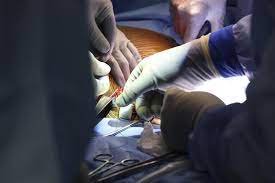
In the first treatment of its sort, Boston surgeons transplanted a kidney into a sick 62-year-old man from a genetically altered pig. If successful, hundreds of thousands of Americans with failed kidneys would have hope thanks to this development. The early signs are encouraging.
The kidneys filter the blood of waste materials and extra fluid. Physicians at Massachusetts General Hospital, also known as Mass General, report that the patient’s condition is improving and that the new kidney started generating urine quickly after the surgery last weekend. He may soon be discharged from the hospital and is already moving about the hallways.
The patient is a Black man, and since end-stage kidney disease is more common in Black individuals, this surgery might be very important to him.
Dr. Winfred Williams, Associate Chief of Mass General’s Nephrology Division and the patient’s primary kidney physician stated that a new kidney source “could solve an intractable problem in the field — the inadequate access of minority patients to kidney transplants.”
According to Dr. Leonardo V. Riella, Medical Director of kidney transplantation at Mass General, dialysis “will become obsolete” if kidneys from genetically modified animals can be donated on a large scale. Mass General Brigham, the hospital’s parent company, created the transplant program.
Dialysis is a process used to remove toxins from the blood and is necessary for over 800,000 Americans who suffer from renal failure. A kidney transplant from a living or deceased human donor is waiting for more than 100,000 recipients. Furthermore, chronic kidney disease affects tens of millions of Americans and can result in organ failure.
Dialysis is a life-sustaining treatment, but organ transplantation is the gold standard. The severe lack of available organs, however, results in thousands of individuals passing away every year while waiting for a kidney. Every year, just 25,000 kidney transplants are carried out.
For many years, the possibility of achieving greater kidney accessibility by xenotransplantation – the transplantation of an animal’s organ into a human has been put forth. However, long-term rejection can happen even when donors are well-matched because the human immune system rejects foreign tissue, leading to potentially fatal consequences.
Recent scientific developments, including cloning and gene editing, have brought xenotransplants closer to reality by enabling the modification of animal genes to increase organ compatibility and decrease the likelihood of immune system rejection.
The kidney was taken from a pig that the biotech company eGenesis had genetically altered to eliminate three genes that could have led to the organ’s rejection. Seven more human genes were added to improve human compatibility. In addition to inactivating the diseases, the business also carries retroviruses that can infect humans in pigs.
Surgeons at NYU Langone Health in New York transplanted a genetically engineered pig’s kidney onto a guy who was brain-dead in September 2021, and they saw it start to work and produce urine.
Scientists from the University of Alabama in Birmingham reported shortly afterward that they had carried out a similar process with comparable outcomes. Hearts from genetically altered pigs have been transplanted into patients with heart problems twice by University of Maryland surgeons. Both of the patients, who had terminal disease, passed away soon after, even though the organs continued to function and the first did not seem to be rejected. (Those who consent to these state-of-the-art experimental treatments are typically terminally unwell with few options; frequently, they are not well enough to be placed on the waiting list for a valuable human organ or are ineligible for other reasons.)
Richard “Rick” Slayman, a supervisor in the state transportation department, was undergoing therapy at Mass General for more than ten years after being diagnosed with diabetes and hypertension.
Mr. Slayman remained on dialysis for seven years after his kidneys failed, and in 2018, he was given a human kidney. However, Dr. Williams stated that the donated kidney failed after five years and that he also experienced other issues, such as congestive heart failure.
According to Dr. Williams, Mr. Slayman needed frequent hospital stays after suffering from serious vascular problems, including blood vessel failure and clotting, when he commenced dialysis in 2023.
Dr. Williams stated that Mr. Slayman was “growing despondent” because of the lengthy wait for another human kidney, although he continued to work despite his health issues. “I just can’t go on like this,” he remarked. I have to stop doing this. I began to consider the exceptional steps we could take.
“It would have taken him five or six years to get a human kidney.” Dr. Williams continued, “He would not have been able to withstand it.”
Mr. Slayman had many concerns when Dr. Williams suggested he had a kidney from a pig, but he ultimately decided.
“I considered it not just as a means of aiding myself, but also as a means of offering hope to thousands of individuals who need a transplant to survive,” he said in a Mass General statement.
So far, Mr. Slayman’s new kidney appears to be working, and he can stop receiving dialysis. The new pig kidney produces urine and removes waste material called creatinine.
According to his doctors, other metrics are also getting better every day. Doctors will observe Mr. Slayman for any indications of organ rejection.
“He has a unique appearance. It’s amazing,” stated Dr. Williams.
Not everyone was in favor of the procedure. Senior Vice President of People for the Ethical Treatment of Animals, Kathy Guillermo, stated that xenotransplantation may introduce new infections into human populations and increase the possibility of even greater animal cruelty.
She declared, “Using pigs as a source of spare parts is dangerous for human patients, deadly for animals, and could start the next pandemic.”
“It is impossible to detect or eradicate every virus that pigs carry. Therefore, researchers must leave the animals alone while they concentrate on improving the organ donation process.”
A team of surgeons led by Dr. Tatsuo Kawai, head of Mass General’s Legorreta Center for Clinical Transplant Tolerance, and Dr. Nahel Elias performed the four-hour operation.
The surgery was carried out following a Food and Drug Administration process known as a compassionate use provision. This provision is given to patients who potentially benefit from an unapproved treatment but have a life-threatening ailment. The approach also included using new medications to inhibit the immune system and stop organ rejection.
Discover more from Campus News
Subscribe to get the latest posts sent to your email.