

Senate Approves Death Penalty for Drug Traffickers
By Reporter 2
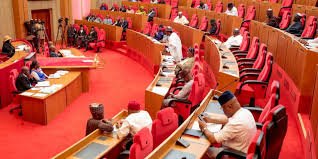
As the 2024 NDLEA Act (Amendment) Bill moves through the third reading, the Senate has approved the death penalty as a punishment for drug traffickers in the nation on Thursday, 9 May 2024. This came after the Senate Committees on the Judiciary, Human Rights and Legal Matters, Drugs and Narcotics adopted their report on the NDLEA Amendment Act in plenary.
Sen. Mohammed Monguno, who chairs the committee on Human Rights and Legal Matters, delivered the report as the Senate reconvened as a committee of the whole to meticulously examine the report.
Sen. Ali Ndume (APC Borno) had earlier presented a motion to change clause 11 of the bill, which at first imposed life imprisonment to drug and substance traffickers in Nigeria, prior to the bill’s adoption during clause-by-clause discussion.
Ndume made a motion to prescribe the death penalty and demanded more severe punishments to drug traffickers. Sen. Onyekachi Nwaebonyi, who seconded the resolution, stated that stronger penalties should be imposed on offenders due to the significant harm that narcotics and substance trafficking were causing to the country.
It seemed the nays had the upper hand when the issue was put to a voice vote. Nevertheless, the Deputy Senate President decided in favour of the I’s when the matter was submitted to a second vote. There was a slight commotion because some legislators weren’t happy.
Senator Adams Oshiomhole expressed his dissatisfaction with the revised clause’s rapid scrutiny and adoption, raising concerns about the potential misuse of the death penalty and the need for a more thorough debate. The Deputy Senate President opposed Senator Oshiomhole’s request to overturn the decision, stating that it was made too late and hence not allowed.
In a move to prevent corruption, nepotism and maintain the judiciary’s independence, the Upper Chamber initiated a review of the salaries, allowances, and fringe perks of Nigerian Judges. This decision, if implemented, could significantly improve judge’s working conditions and enhance the judicial system’s overall efficiency and integrity.
The executive law, which aims to set salaries for Federal and Provincial Judges, passed a second reading on Thursday, 9 May 2024. This is anticipated to end the long period of pay stagnation and bring compensation to the present socioeconomic conditions.
Despite the bill’s unanimous approval, a few representatives advocated for an equal evaluation of Nigeria’s income and compensation in other industries, given the country’s current economic challenges.
Following the bill’s unanimous approval, the Committee on Judiciary, Human Rights, and Legal Matters was tasked with reviewing the measure and providing a comprehensive report in four weeks. This report will be crucial in shaping the bill’s final version and determining its fate in the legislative process.
Read Also: APC Rejects INEC Claim on Ondo Guber Primary
Discover more from Campus News
Subscribe to get the latest posts sent to your email.