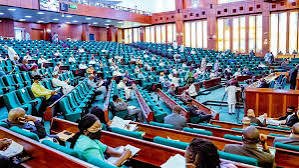
House of Reps Move to Add 74 Seats for Women as Bill Passes Second Reading
By Reporter 2
On Tuesday, 9 July 2024, the House of Representatives approved a bill seeking to create 74 seats for women in the National Assembly. The bill, sponsored by Deputy Speaker Benjamin Kalu and 12 others, seeks to amend Sections 48, 49, 71, and 117 of the 1999 Constitution (as amended) to create one “special seat reserved exclusively for women in the Senate and House of Representatives for each State of the Federation and the Federal Capital Territory (FCT).”
The bill, which was signed into law, will go into force when the present national assembly’s term expires and will be reviewed every 16 years. The bill also proposes amending Section 91 of the constitution to include three special seats “reserved exclusively” for women in the State Houses of Assembly.
Leading the debate, Joshua Gana, a member representing Lavun/Mokwa/Edati Federal; Constituency, Niger State, and bill co-sponsor, stated that the proposed law will address the “profound imbalance and under-representation of women in the National Assembly and at sub-national levels.”
He went on to say that the bill is “anchored on the fundamental principle of equitable representation and aims to empower women by ensuring their voices are not only heard but actively contribute to shaping the legislative landscape and the overall development of our nation.” The question of gender equality and representation is vital to our constitutional democracy,” he stated.
Gana remarked that, despite the constitution’s guarantee of equal rights, women’s representation in the legislature has been “alarmingly low.” He stated, “In the 7th, 8th, and 9th Assemblies, women accounted for only 6.4 percent, 6.1 percent, and 2.7 percent of the Senate, and 6.4 percent, 3.05 percent, and 4.7 percent of the House of Representatives, respectively.
“These numbers highlight the essential need for proactive efforts to guarantee fair representation and amplify women’s voices in our national and subnational legislative chambers. “The reasoning behind this amendment is based on the principles of fairness and inclusion.
“Globally, Nigeria is among the lowest in terms of female parliamentary representation. Countries that have used affirmative action, such as Rwanda and Andorra, have made tremendous progress toward gender equality in governance.”
Akin Rotimi, the House spokesman, stated that there is a “broad consensus” for increasing women’s representation in parliament. Kingsley Chinda, the minority leader of the House, endorsed the bill, stating that parliament must address the deficiency. He clarified: “We must make a deliberate effort to solve problems where we see them,” as he stated.
Kelechi Nwogu from Rivers supported Chinda’s argument, stating that women should be given a “better opportunity” in politics. Ghali Tijani, a politician from Kano State, believes that rather than reserving particular seats for women, political parties should implement measures to increase women’s political engagement. Olamijuwonlo Alao Akala from Oyo, Patrick Umoh from Akwa Ibom, and Billy Osawaru from Edo rejected the bill, stating it violated constitutional restrictions.
Read Also: Parkinson’s Doctor made White House Visits Eight Times, Logs Show
Discover more from Campus News
Subscribe to get the latest posts sent to your email.