

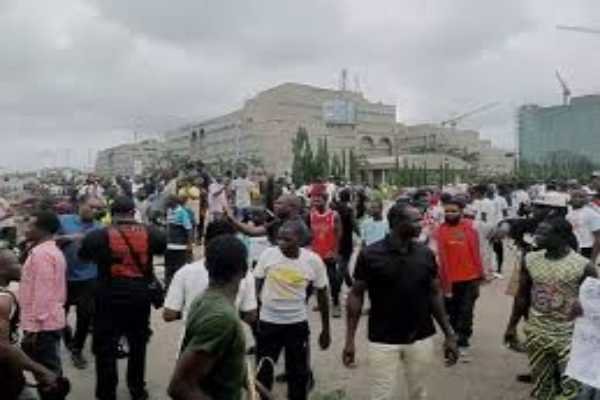
Protesters in Abuja Defy Security Crackdown, Overrun Federal Secretariat Complex
By Reporter 2
The Central Business District in Abuja, which is often a hive of business and governmental activity, was almost abandoned on Thursday, 1 August 2024, as thousands of protesters flocked the streets to voice their concerns over hunger and economic hardship.
Three major markets, Wuse, Utako, and Garki, were forced to close due to the enormous demonstration, which interrupted daily life and left the Garki market with barely minimal activity.
The majority of traders did not turn up, and those who did refused to show off their wares. Due to the protests, there was a complete cessation of commercial operations, with many stores and businesses closing, giving the area the feel of a public holiday.
With chants like “We dey Hungry” and “Nigerian government is a scam,” the demonstrators made their way to Eagle Square Arena within the Federal Secretariat Complex.
Thousands of demonstrators gathered at Eagle Square, sparking a tense standoff with security personnel, despite a court order and a directive from FCT Minister Nyesom Wike limiting the rally to MKO Abiola Stadium.
Plainclothes Police officers and agents were among the security professionals stationed in key locations to keep an eye on the situation. Though the protest was mainly peaceful, it was nevertheless very volatile due to the significant security presence and frequent use of tear gas to disperse the gathering.
Despite the security forces’ harsh response, the demonstrators withdrew for a short while before regrouping. Among the complaints voiced by protesters were the high cost of living, unemployment, and what they saw as government passivity in the economic crisis. Fears about possible interruptions to government and business operations increased as the protest went on.
Security personnel built temporary barbed wire barriers on Shehu Shagari Way, a vital thoroughfare that leads to important government buildings, in an attempt to stop the situation from getting worse. Helicopters for patrol and surveillance circled above to keep an eye on the throng. The protestor population increased despite these actions, posing a threat to overrun the local security personnel.
There was very little vehicular activity and movement on Abuja’s usually bustling streets and markets as a result of the situation. Drivers were freely weaving in and out of one-way lanes, openly breaking traffic restrictions. The protest’s effects went beyond the surrounding area, impacting the city’s everyday life as well as several economic sectors.
To make matters more complicated, thugs who were originally hired to assist the government eventually joined the anti-government demonstrators since they were not given the N1,000 that was promised to them. Security services intervened when some tried to start bonfires. There were stone remnants from past clashes throughout the Umar Yar’Adua road, which leads to the Nnamdi Azikiwe International Airport.
Concerns were raised about the possibility of further escalation and the long-term effects on Abuja’s stability and economy as the demonstration showed no signs of abating and the protestors remained obstinate and determined to make their opinions known.
Read Also: Hardship Protest: Organizers Disagree with IGP’s Proposal for Restricted Protests
Discover more from Campus News
Subscribe to get the latest posts sent to your email.